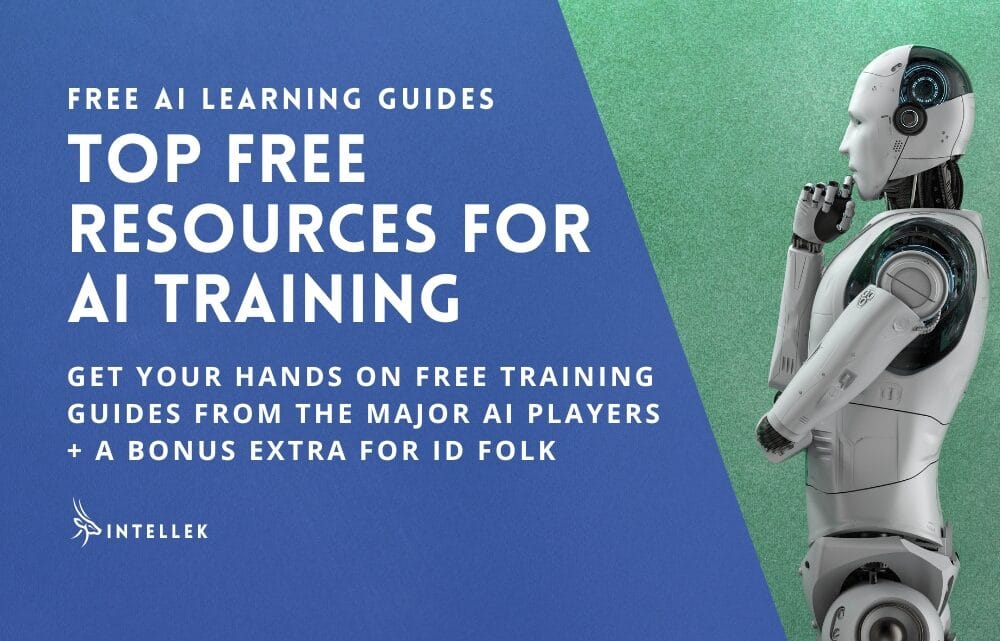
Google, OpenAI, and Anthropic have all released free AI learning resources. While some are still spending over $1,000 on artificial intelligence courses, the top generative AI companies are giving away high-level AI training guides at no cost.
These free AI training guides represent an unprecedented opportunity to gain valuable skills without financial barriers, as the big names in AI release comprehensive guides that would normally cost thousands of dollars in premium courses. This complete collection of ten essential resources covers everything from prompt engineering fundamentals to enterprise-scale agent deployment, offering direct access to the same frameworks and strategies these companies use internally.
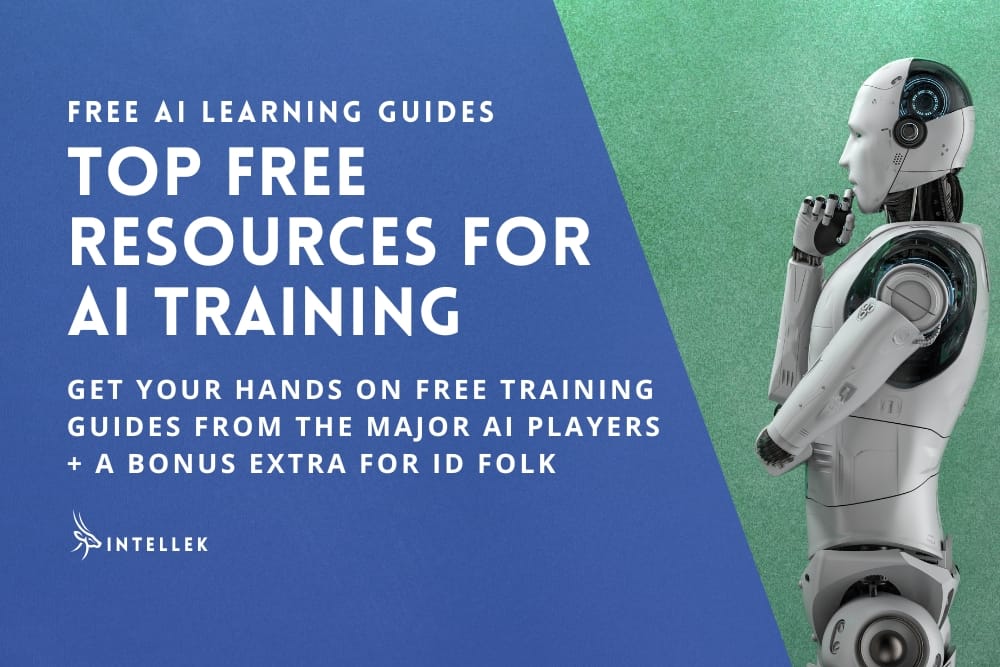
Whether you’re building your first chatbot or scaling AI across an entire organization, these guides provide practical, actionable knowledge that transforms complex AI concepts into implementable solutions you can use immediately.
Best Free Generative AI Training Guides
The landscape of artificial intelligence education has transformed dramatically as leading AI companies open their knowledge vaults to the public. These free AI learning resources represent years of research, development, and real-world testing condensed into practical training guides that eliminate the guesswork from AI implementation.
Each resource addresses specific challenges that businesses and developers face when working with large language models, from crafting effective prompts that consistently produce desired outputs to building sophisticated AI agents that can handle complex multi-step tasks. The guides combine theoretical foundations with hands-on examples, ensuring readers understand not just what to do, but why certain approaches work better than others in different scenarios.
From generative AI prompt engineering to artificial intelligence agent frameworks, it’s all here:
1. Google’s Prompting Guide – Quick-start handbook for effective prompts
Essential Gemini tips and role-based prompting strategies designed specifically for Google Workspace environments, providing practical frameworks that improve AI interactions across business applications.
In this guide:
- Gemini tips
- Role-based prompts
- Workspace strategies
🔗 https://services.google.com/fh/files/misc/gemini-for-google-workspace-prompting-guide-101.pdf
2. OpenAI Guide to Agents – Practical guide to building agents
Detailed agent architecture blueprints with real use cases and proven best practices that show exactly how to design, build, and deploy AI agents that can handle complex workflows autonomously.
In this guide:
- Agent architecture
- Use cases
- Best practices
🔗 https://cdn.openai.com/business-guides-and-resources/a-practical-guide-to-building-agents.pdf
3. OpenAI: AI in the Enterprise – Lessons from seven frontier companies
Strategic roadmap and adoption steps learned from successful enterprise implementations, including detailed use case designs and practical insights from companies at the forefront of AI transformation.
In this guide:
- Adoption steps
- Strategic roadmap
- Use case design
🔗 https://cdn.openai.com/business-guides-and-resources/ai-in-the-enterprise.pdf
4. Google Agent Companion Whitepaper from Kaggle
Technical deep dive into AI agent flows with evaluation metrics and real-world examples that demonstrate how to measure agent performance and optimize decision-making processes effectively.
In this guide:
- AI agent flow
- Evaluation metrics
- Real examples
🔗 https://www.kaggle.com/whitepaper-agent-companion
5. Anthropic’s AI Agent Framework – Building effective agents
Claude-specific agent development guide covering prompt flow design and iteration logic, with practical frameworks for building agents that maintain consistency and reliability across complex tasks.
In this guide:
- Claude agents
- Prompt flow
- Iteration logic
🔗 https://www.anthropic.com/engineering/building-effective-agents
6. Anthropic Coding – Claude Code: Best practices for agentic coding
Security-focused AI training guide on safe coding practices, covering secure code structure, prompt injection prevention, and techniques for generating clean, maintainable outputs in development environments.
In this guide:
- Secure structure
- Prompt injection safety
- Clean output
🔗 https://www.anthropic.com/engineering/claude-code-best-practices
7. AI and LLM Research Book – Foundations of Large Language Models
Academic-level exploration of LLM mechanics, model design principles, and deep architecture insights that provide the theoretical foundation needed to understand how modern AI systems actually work.
In this guide:
- LLM mechanics
- Model design
- Deep architecture
🔗 https://arxiv.org/pdf/2501.09223
8. Prompt Engineering for LLMs – Art and science of building LLM–based apps
A comprehensive deep dive into prompt structures and real-world use cases that teaches both the creative and technical aspects of LLM integration, covering everything from basic prompt construction to advanced application architecture.
In this guide:
- Prompt structures
- Real use cases
- LLM integration
9. Scaling AI Use Cases – How early adopters focus their AI efforts
An enterprise-focused framework for use case filtering, risk mapping, and readiness assessment that helps organizations identify which AI applications will deliver the highest return on investment.
In this guide:
- Use case filter
- Risk mapping
- Enterprise readiness
🔗 https://cdn.openai.com/business-guides-and-resources/identifying-and-scaling-ai-use-cases.pdf
10. The Power of: NotebookLM Your AI Research and Learning Companion
Comprehensive free AI learning resource to Google’s NotebookLM featuring practical applications, advanced tips and tricks, and workflows that transform how you interact with AI-powered knowledge management.
In this guide:
- Understanding NotebookLM
- NotebookLM in action
- Tips and tricks
🔗 https://services.google.com/fh/files/misc/google_workspace_notebooklm_ebook.pdf
11. Perplexity at Work – A Guide to Getting More Done
Free 42-page guide from Perplexity that shows how to use AI at work in a structured, practical way. Whether you’re managing research, writing, project delivery or performance reviews, the guide offers concrete examples of how to let AI handle routine tasks, freeing you up for strategic work that actually makes a difference.
In this guide:
- Block distractions
- Scale yourself
- Get results
🔗 https://r2cdn.perplexity.ai/pdf/pplx-at-work.pdf
Free AI Training Guide for Instructional Designers
Here’s the bonus we promised to go with these free AI learning resources – our specialized prompt engineering guide created specifically for learning professionals who need to integrate AI into corporate training programs. While the resources above cover general AI applications, instructional designers face unique challenges when balancing cutting-edge technology with proven educational principles.
Our free guide bridges this gap by focusing on practical AI applications that enhance rather than replace sound learning theory. The guide covers everything from automating content creation to designing intelligent assessments, all while maintaining the pedagogical rigor that effective corporate training demands.
Check out our complete article “Instructional Design and AI: Beginner’s Guide to Prompt Engineering for Corporate Training” and discover how prompt engineering can revolutionize your approach to corporate learning design.
Why Free AI Learning Resources Change Everything
These ten free AI learning resources represent millions of dollars worth of research and development insights, now available to anyone willing to invest the time to learn. The companies releasing these free AI training guides understand that widespread AI literacy benefits everyone, creating a more informed community of developers, researchers, and business leaders who can push the technology forward responsibly.
By mastering these freely available AI training resources, you gain access to the same knowledge base that powers the most successful AI implementations in the world, positioning yourself at the forefront of a technological revolution that will define the next decade of human progress.

Intellek (formerly TutorPro) is a founding member of the learning technology industry. With a presence in the USA, UK, Canada, and the EU – for over 30 years we have pioneered the development of cutting-edge eLearning software and online training solutions, with a large and diverse portfolio of international clientele.
Disclaimer: We use all the tools available including generative AI to create relevant and engaging content.